

Why Peer Play Is Your Child’s Best Life-Skills Coach
Research shows that when children regularly work, play, and solve problems with peers, their learning goes beyond just "socializing"— children practice crucial skills that will translate to future success in classrooms, professional spaces, family units, and communities. Structured group activities give children the opportunity to learn to delegate tasks, listen to different viewpoints, and strengthen their ability to express their ideas.
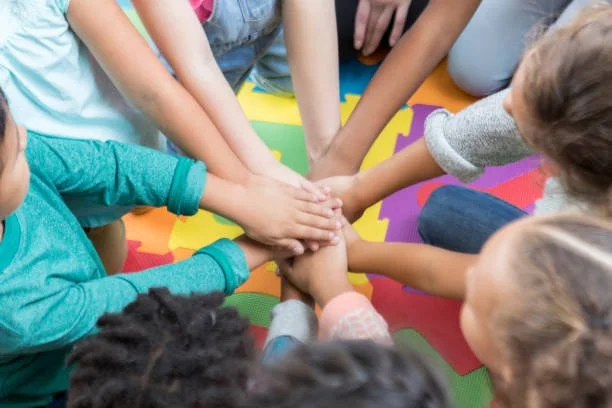
Based on findings from Boke et al. (2025) and Laal & Ghodsi (2012), cooperative learning (small-group projects with a shared goal) and peer-mediated interventions (buddy systems) consistently improves communication skills, self-regulation (regulating one's own emotions), and problem-solving, along with improved academic engagement and motivation.
When a child learns how to effectively support each other and resolve problems collectively, they build emotional intelligence, conflict resolution strategies, and leadership habits. Peer interactions nurtures growth that cannot be learned from worksheets or teacher-instructed class time.
At Campspire, we create high-challenge, low-risk peer settings — presenting unfamiliar challenges to your kids. Our programs are meticulously designed to constitute growth and development that is critical to building character and life skills promoting teamwork and individual leadership. Shared experiences and working through challenges emphasizes connections, collaboration and the bond between peers. Campspire is designed for families who want their children to grow into adaptable, collaborative, and socially fluent leaders in the community. Our strategically researched-backed guided peer interaction aims to translate positive childhood experiences into real-world life skills.
